 (254) 776-1030
After a crash, pain does not always show up right away. You may feel fine at first, then notice stiffness, soreness, or headaches later. The Mayo Clinic notes that symptoms of whiplash most often start within days of the injury, and the Cleveland Clinic reports that some whiplash symptoms take at least 12 hours to appear. A car accident chiropractor can check muscle and joint problems once serious injuries have been ruled out.
This is not a rare situation. The National Highway Traffic Safety Administration recorded 6,138,359 police-reported traffic crashes in the United States in 2023, and an estimated 2,442,581 people were injured in them.
This guide explains why symptoms may appear later, what signs to watch for, and when chiropractic care may be useful.
Table of Contents
Why See a Car Accident Chiropractor After a Crash?

A car accident chiropractor can examine areas that hurt, feel stiff, or do not move normally after a crash.
Some people notice pain within minutes. Others feel sore later that day or over the next few days.
Neck and back complaints make up a large share of those injuries. Research published by the Insurance Institute for Highway Safety in 2008 found that neck sprain or strain is the most serious injury in about one-third of insurance claims for injuries in all kinds of crashes, and estimated that about 4 million rear collisions occur each year in the United States.
A popular supplemental treatment for some musculoskeletal issues is chiropractic care. According to data from the CDC National Health Interview Survey, 10.3 percent of American adults visited a chiropractor in 2017, up from 9.1 percent in 2012. The American College of Physicians lists spinal manipulation as the first non-pharmacological treatment for acute and subacute low back pain.
An early visit also creates a dated record of your symptoms. That record may be useful if you later need to explain when the pain started. An early examination also gives your clinician a baseline. If your range of motion, tenderness, or strength changes over the following weeks, there is something to compare against.
Chiropractic care is not the right first stop for every crash injury. Serious symptoms should be checked by a medical provider first.
Why Do Symptoms Show Up Late?
Delayed symptoms after a car accident are not unusual.
There are a few reasons this can happen:
- Stress response: Right after a crash, the body may make pain less noticeable. Researchers call this stress-induced analgesia. A review in Progress in Neurobiology describes it as pain suppression on exposure to stressful stimuli, driven by the body’s descending inhibitory pain pathway and endogenous opioids. The effect fades once the stress does.
- Inflammation: Soreness and stiffness can build as injured tissue reacts.
- Muscle tension: Muscles may tighten around a sore area.
- Whiplash: Neck pain and headaches may take time to appear.
- Head injury: The CDC states that some mild traumatic brain injury and concussion symptoms may appear right away, while others may not appear for hours or days after the injury.
Cleveland Clinic notes that whiplash symptoms may start right away or take hours or days to develop.
| Time After Crash | What You May Notice |
| First few hours | Little pain, mild soreness, or stiffness |
| First day | Neck pain, back pain, headache, or less movement |
| Next few days | Pain or stiffness may become easier to notice |
Not everyone follows the same timeline. New or worsening symptoms should be checked.
Common Injuries After a Crash
A crash can affect muscles, joints, discs, and nerves.
Common problems include:
- Whiplash
- Neck or back strains
- Joint irritation
- Disc injuries
- Shoulder or upper back pain
- Nerve irritation
Many of these injuries improve with time and proper care. Others need testing before treatment begins.
Recovery is common but not universal. The Bone and Joint Decade 2000 to 2010 Task Force on Neck Pain, writing in the journal Spine, concluded that approximately 50 percent of those with whiplash-associated disorders will report neck pain symptoms one year after their injuries. Greater initial pain, more symptoms, and greater initial disability predicted slower recovery. Notably, few factors related to the collision itself, such as the direction of impact or headrest type, were prognostic, which is a useful reminder that a minor-looking crash does not guarantee a minor injury.
Back Pain After a Car Accident
Back pain after a car accident can happen even after a low-speed impact.
The force of a crash can strain muscles and ligaments. It can also irritate joints, discs, or nearby nerves.
You may notice:
- Aching or stiffness
- Pain when bending
- Muscle spasms
- Pain that moves into the leg
- Tingling or numbness
Pain that travels into the leg may involve a nerve. Severe weakness, numbness, or bladder problems need medical care right away.
Headache After a Car Accident
A headache after a car accident may come from neck strain, tight muscles, or whiplash.
It can also happen with a concussion.
Pay close attention if the headache keeps getting worse. Get urgent medical help if it comes with vomiting, confusion, weakness, seizures, or trouble staying awake.
The CDC lists these as warning signs that can follow a head injury.
Its list for adults also includes one pupil larger than the other, decreased coordination, being unable to recognize people or places, and looking very drowsy or being unable to be woken up.
When to Get Urgent Care After a Car Accident
Get urgent care after a car accident or go to an emergency room if you have serious warning signs.
Seek help right away for:
- Loss of consciousness
- A severe or worsening headache
- Repeated vomiting
- New weakness or numbness
- Confusion or slurred speech
- Seizures
- Trouble breathing
- Heavy bleeding
- Severe chest or stomach pain
- Severe neck or back pain
- Loss of bladder or bowel control
- One pupil is noticeably larger than the other
- Midline tenderness along the spine, or an inability to turn your head 45 degrees to each side
Those last two points are not arbitrary. Emergency clinicians use validated checklists to decide who needs neck imaging after blunt trauma. The NEXUS criteria clear the neck without imaging only when there is no midline tenderness, no distracting injury, no neurologic deficit, no intoxication, and no altered mental status. The Canadian C-Spine Rule adds dangerous mechanisms, and whether you can rotate your neck 45 degrees to each side. A 2012 systematic review in the Canadian Medical Association Journal reported sensitivity of 90 to 100 percent for the Canadian C-Spine Rule and 83 to 100 percent for NEXUS.
A chiropractor should not be used to rule out a fracture, concussion, or internal injury.
If your symptoms are mild and involve muscles or joints, chiropractic care may be one option after urgent problems are ruled out.
How Chiropractic Care May Help
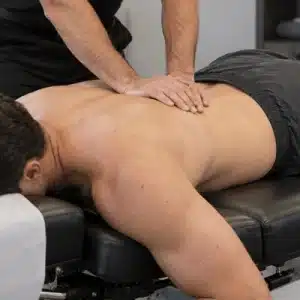
At the first visit, the chiropractor will usually ask what happened and where you feel pain.
The exam may include checks of:
- Neck and back movement
- Muscle tenderness
- Joint motion
- Strength
- Reflexes
- Areas of stiffness
Care may include gentle spinal treatment, soft-tissue work, stretching, or simple exercises.
What the guidelines recommend
The Ontario Protocol for Traffic Injury Management (OPTIMa) Collaboration published a clinical practice guideline in the European Spine Journal in 2016 covering neck pain and whiplash after traffic collisions. For grade I and II neck pain of three months’ duration or less, it recommends structured patient education combined with range of motion exercise, multimodal care (range of motion exercise together with manipulation or mobilization), or muscle relaxants.
The same guideline recommends against patient education on its own, strain-counterstrain therapy, relaxation massage, a cervical collar, electroacupuncture, electrotherapy, or clinic-based heat.
Research suggests spinal manipulation may offer short-term pain relief for some neck and back problems. The right treatment depends on the injury and the person.
Movement and exercise may also be part of recovery when they are safe. The American College of Physicians advises clinicians to reassure patients that acute and subacute low back pain usually improves over time, regardless of treatment.
Is Chiropractic Care Safe?
Most side effects from chiropractic treatment are mild. Soreness or stiffness can happen after a visit and often fades quickly. NCCIH describes transient mild to moderate side effects, most commonly increased pain or discomfort, stiffness, or headache, and notes that most of these side effects go away within 24 hours.
Neck manipulation is not suitable for everyone. The chiropractor should check for warning signs before using hands-on treatment. Tell your chiropractor about blood thinners, osteoporosis, or a sudden, severe headache unlike any you have had before.
Do You Need an X-ray?
X-rays are not needed after every crash.
They may be used when a fracture or bone injury is suspected. X-rays do not show most muscle, ligament, or whiplash injuries. The American Chiropractic Association’s Choosing Wisely recommendation states that in the absence of red flags, clinicians should not obtain spinal imaging for acute low back pain during the six weeks after onset. The Association is clear that this does not extend to trauma suggesting underlying pathology such as a compression fracture, which is exactly when imaging is appropriate.
Documenting Your Care After a Crash
Keeping records can help show when symptoms started and how they changed.
Save copies of:
- Exam notes
- Imaging reports
- Treatment plans
- Bills
- Receipts
- Referral records
A long gap before seeking care can make the timeline harder to show.
Insurance coverage also varies. Your policy, state rules, and medical needs can all affect whether chiropractic visits are covered.
How soon should I see a chiropractor after a car accident?
There is no rule that everyone needs chiropractic care within 24 to 72 hours. Get medical help sooner if you have severe symptoms or warning signs. For mild muscle or joint pain, a chiropractor may be an option once serious injuries are ruled out.
Can a car accident cause pain days later?
Yes. Delayed symptoms after a car accident can appear hours or days later. Neck pain, back pain, stiffness, and headaches may take time to show up. Get checked if symptoms worsen or do not improve.
What does whiplash feel like?
Whiplash often causes neck pain, stiffness, and trouble turning the head. Some people also feel pain in the shoulders or upper back. Headaches are also common.
Is chiropractic care covered by insurance after a crash?
It may be, but coverage differs by policy and state. Some insurers may ask for proof that treatment is needed. Check your benefits before assuming every visit is covered.
Do I need an X-ray after a car accident?
Not always. X-rays are mainly used when a fracture or other bone injury is suspected. They do not show most soft-tissue injuries.
When should I go to the ER instead of a chiropractor?
Go to the ER for severe headaches, loss of consciousness, trouble breathing, heavy bleeding, confusion, weakness, or severe pain. These signs may point to a serious injury. Mild muscle or joint pain can be checked later once urgent problems are ruled out.
Pain after a crash can change over the first few days. Watch for new stiffness, back pain after a car accident, headaches, numbness, or other symptoms that do not improve. If serious injuries have been ruled out, chiropractic care may help with some muscle and joint problems.
Book an appointment with our team to have your symptoms checked and learn which care options may fit your needs.