 (254) 776-1030

Can a chiropractor help spinal stenosis? It can be a helpful part of non-surgical care. Gentle hands-on care and exercise may ease symptoms, but they cannot reverse a narrowed spinal canal.
Spinal stenosis is a common source of back and leg pain, especially later in life. Researchers writing in JAMA Network Open note that lumbar spinal stenosis affects about 30% of older adults and is the most common reason older adults in the United States have spine surgery. If you are living with it, you may be wondering what you can try before considering an operation.
Non-surgical care is the usual starting point. American Family Physician lists chiropractic treatment among the non-surgical options for lumbar spinal stenosis, along with physical therapy, exercise programs, spinal injections, acupuncture, and lifestyle changes.
This guide explains what spinal stenosis is, what research says about chiropractic care, which other non-surgical treatments may help, and how to adjust your exercise and sleep habits to stay more comfortable.
Table of Contents
What Is Spinal Stenosis?
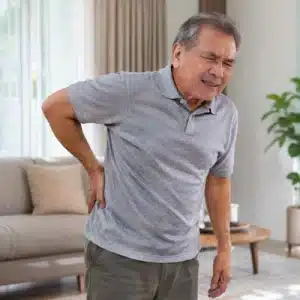
Spinal stenosis happens when spaces within your spine become narrow. This can put pressure on nearby nerves, causing pain, numbness, or weakness.
It often affects the lower back or neck. Lumbar spinal stenosis becomes more common with age. Mayo Clinic notes that age is the main risk factor and that most people with spinal stenosis are over 50.
Several changes can narrow the spinal canal. Mayo Clinic lists bone spurs from arthritis-related wear and tear, herniated discs, and ligaments that thicken and stiffen over time. Less often, tumors inside the spinal canal are the cause. The National Institute of Arthritis and Musculoskeletal and Skin Diseases adds that spinal stenosis can also appear in younger people who were born with a narrow spinal canal or who have had a spinal injury.
You might notice:
- An ache in your lower back that travels down one or both legs
- A pins-and-needles feeling or patches of numbness in your legs
- Legs that cramp or feel weak after you’ve been walking
- Less discomfort when you sit down or bend forward
If leaning on a shopping cart while you walk eases your leg pain, mention it to your provider. This “shopping cart sign” is a clue that can point toward lumbar spinal stenosis, because bending forward gives the nerves a little more room.
When stenosis affects the neck, Mayo Clinic lists symptoms such as neck pain, numbness, tingling, or weakness in an arm, hand, leg, or foot, trouble with walking and balance, and difficulty with fine hand tasks like writing.
The National Institute of Arthritis and Musculoskeletal and Skin Diseases notes that symptoms often develop gradually. Some people with a narrowed canal have no symptoms at all. Doctors may use an MRI when imaging is needed. American Family Physician describes MRI as the recommended test because it shows cross-sections of the spinal canal.
Can a Chiropractor Help Spinal Stenosis?
Chiropractic care may help reduce pain and improve movement in some people with lumbar spinal stenosis. Gentle manual therapy can be useful when combined with exercise and other treatments.
A 2019 JAMA Network Open trial of 259 patients found better short-term results with manual therapy and exercise. The participants were adults over 60 with lumbar spinal stenosis, and their average age was 72. For six weeks, each person received one of three treatments: medical care (medication and/or epidural injections), group exercise classes, or manual therapy with individualized exercise from chiropractors and physical therapists. The manual therapy group received spinal mobilization, stretches, and strength training.
At two months, about 65% of the manual therapy and exercise group had improved their walking capacity by at least 30%, compared with about 49% of the medical care group and 46% of the group exercise group. At six months, outcomes were similar across treatment groups.
Researchers also looked at spinal manipulation in a 2026 review published by the Journal of the Canadian Chiropractic Association. They found signs that it could help some patients, but there were too few strong studies to draw firm conclusions.
Overall, the authors found that spinal manipulation may offer comparable or modestly greater benefit than other conservative treatments, and they called for more high-quality trials in older adults.
What Does Chiropractic Treatment Involve?
Before starting treatment, your chiropractor should ask about your pain and check your nerve function. They’ll also need to know about any past back injuries or health conditions.
Your care may involve:
- Gentle joint movements when certain parts of your back feel stiff
- Hands-on muscle work to help loosen tight areas
- Simple home exercises you can practice between appointments
- Tips for everyday tasks, such as finding a more comfortable way to sit or lift things
Forceful adjustments may be unsuitable for people with certain nerve or bone problems.
Researchers have also studied safety. A 2026 study in PM&R compared 34,376 adults with lumbar disc herniation, stenosis, or radiculopathy who received chiropractic spinal manipulation with the same number of matched adults who received physical therapist-led exercise without manipulation. The risk of cauda equina syndrome, a rare but serious nerve emergency, did not differ significantly between the two groups.
Treatment aims to make daily movement easier, not widen the canal.
Spinal Stenosis Treatment Without Surgery
Spinal stenosis treatment without surgery is often the first choice when there are no serious nerve problems.
American Family Physician advises trying non-surgical care first when there are no signs that surgery is urgently needed. What helps will depend on your symptoms and how much they interfere with daily life.
| Treatment | What It Can Do |
| Chiropractic care | May help you move with less discomfort |
| Physical therapy | Helps strengthen muscles and build walking tolerance |
| Anti-inflammatory medicine | Can ease pain for a while, though it isn’t suitable for everyone |
| Epidural steroid injections | May make daily activities easier for some patients |
| Changes to daily activities | Help you work around movements that set off symptoms |
The American Academy of Neurology reviewed epidural injections in 2025. The review, published in Neurology, analyzed 90 studies. It found that some patients with lumbar stenosis had modest improvements in function, although pain relief was limited.
Compared with control treatments, epidural steroid injections may have reduced disability in people with lumbar spinal stenosis. Estimated improvement rates were about 26 percentage points higher within three months and 12 percentage points higher at six months or longer. Some control groups received injections without steroids. Confidence in these findings was low, and the review found no clear reduction in stenosis pain in the first three months.
Seek emergency care for new bladder or bowel control problems, numbness around the groin, or rapidly worsening leg weakness. These symptoms may signal serious nerve compression. One such condition is cauda equina syndrome, which the American Academy of Orthopaedic Surgeons describes as a surgical emergency. Lumbar spinal stenosis is one of its possible causes.
Spinal Stenosis vs Herniated Disc
Spinal stenosis vs herniated disc involves two different causes of nerve irritation.
| Feature | Spinal Stenosis | Herniated Disc |
| Cause | Narrowing around spinal nerves | Disc material pushes outward |
| Onset | Usually gradual | Sudden or gradual |
| Common symptoms | Leg pain, cramping, numbness | Back or leg pain, tingling |
| Pain pattern | Often worse when standing or walking | Varies with movement |
| Relief | Often improves when leaning forward | Depends on the person |
A herniated disc can also cause narrowing. Mayo Clinic lists herniated discs as one of the causes of spinal stenosis. An exam helps identify the problem.
Posture can offer another clue. The Merck Manual notes that herniated disc pain is often made worse by coughing, sneezing, straining, or leaning forward. Many people with spinal stenosis notice the opposite pattern, with leaning forward easing their symptoms.
Spinal Stenosis Exercises to Avoid
If a movement makes your legs burn, tingle, or feel weak, don’t push through it. Certain back movements can bring on symptoms, especially when you arch backward. The National Institute of Arthritis and Musculoskeletal and Skin Diseases explains that walking, standing, or leaning back tends to worsen symptoms, while sitting or leaning forward tends to relieve them. According to InformedHealth.org, which is run by Germany’s Institute for Quality and Efficiency in Health Care, bending forward creates more space between the lower vertebrae.
Spinal stenosis exercises to avoid or change may include:
- Repeated back bends that bring on leg pain
- Heavy lifts that make symptoms worse
- Running or jumping when these trigger discomfort
- Any exercise that increases numbness or weakness
These are not banned for everyone. Pay attention to your symptoms.
Better Exercises to Try
Try stationary cycling, water walking, gentle knee-to-chest stretches, or core exercises suited to your needs. Start slowly and seek guidance.
InformedHealth.org describes cycling, outdoors or on an exercise bike, as a good fit for people with spinal stenosis because you naturally lean forward on a bike. It also suggests swimming on your back and water aerobics. Your chiropractor can help you choose exercises that match your symptoms and fitness level.
Best Sleeping Position for Spinal Stenosis
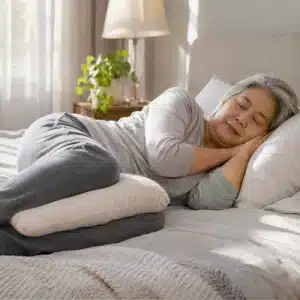
There’s no single best sleeping position for spinal stenosis. The goal is to settle into a position that doesn’t trigger back or leg pain.
Try these positions:
- On your side: Bend your knees slightly and place a pillow between them.
- On your back: Rest a pillow beneath your knees.
- Slightly reclined: Raise your upper body if that feels better.
Some people feel worse sleeping on their stomach because it arches the lower back. If that’s your usual position, a pillow under your hips may help.
Mayo Clinic suggests using pillows for support. Choose what feels comfortable.
Is chiropractic care safe for older adults with spinal stenosis?
Gentle chiropractic care may be suitable for some older adults with spinal stenosis. Your chiropractor should assess your symptoms, bone health, and medical history first. Certain adjustments may be inappropriate if you have severe nerve problems or other spine conditions.
Can spinal stenosis improve without surgery?
Yes. Some people find their symptoms settle down over time, even without an operation. Exercise and other treatments may help you stay on your feet longer or get through chores with less pain. The spinal canal may still be narrow, though, even when you’re feeling better.
Do I need an MRI before seeing a chiropractor?
Not everyone needs an MRI before starting conservative care. Your healthcare provider will review your symptoms and check for signs of nerve problems. Imaging may be recommended when symptoms are severe, getting worse, or difficult to explain.
Is walking good for spinal stenosis?
Walking helps you stay active, but you may need to change how far you go. If your legs start aching, sit down and take a break. Try shorter walks, or ask whether a stationary bike might suit you better.
How long should I try non-surgical treatment?
There isn’t a fixed deadline for deciding whether treatment is helping. Think about what you can do now compared with a few weeks ago. Can you walk farther, or get through the day with less pain? If you’re still struggling, talk with your provider about what to try next.
When does spinal stenosis require surgery?
Doctors may suggest surgery when pain or trouble walking continues to disrupt daily life, despite other treatments. Weakness that’s getting worse is another reason to see a spine specialist. If you suddenly lose bladder or bowel control, or develop numbness around your groin, go to an emergency department.
Can a chiropractor help spinal stenosis? Some people find that gentle care and regular exercise make daily movement less painful. For persistent back or leg symptoms, Heart of Texas Chiropractic can discuss your options. Book a consultation to learn more.